

Menopausal women frequently complain that they suffer not only from the well-known symptoms such as hot flushes, weight gain and 'brain fog', but from a host of other problems that include poor sleep, anxiety and loss of libido. Among men, the complaints of ageing usually include a steady decline in strength, stamina, libido, mental sharpness, and often weight gain. They feel their masculinity slipping away.
While the female menopause is widely recognised, though often poorly understood and regularly poorly treated, the male equivalent is barely even recognised and rarely receives much consideration. Thisis largely because the male menopause – often called the andropause - usually has a much less rapid and dramatic onset than is seen in menopausal women. However, it is no less real.
Furthermore, quite apart from the very prominent symptons just described, there is a range of other metabolic issues that develop, particularly in menopausal women, and which become apparent only over a prolonged period. These include osteoporosis (thinning and weakening of the bones), heart disease, metabolic imbalances/diseases such as diabetes, and mental health problems.
It is no wonder that ageing men and women frequently feel they need help to combat and slow the rapidly accelerating ageing process.
This is where any form of hormone replacement therapy comes in, and most especially the bio-identical hormone replacement therapy.
Starting a BHRT programme
A programme of BHRT with me starts with an in-depth consultation in which we talk about your symptoms and what you would like to achieve with treatment, at the end of which a blood sample is taken. This is sent to a laboratory for your sexual hormone levels to be analysed, mostly oestradiol, progesterone, testosterone and DHEA. These hormones are crucial in regulating a range of physiological processes, not just sexual function and activity.
It is a common misconception that women have no testosterone and men no progresterone or oestradiol. This is a complete myth. Women do have testosterone, but only about one-tenth of the levels typically seen in men. Similarly, men have just a fraction of the amount of progesterone and oestradiol seen in women, but need these hormones in order to feel good and fit.
At least this is the case among younger adults. Among menopausal women all their sexual hormone levels go crashing through the floor, playing havoc with the many metabolic processes they influence. Among andropausal men the situation is a little less dramatic, though testosterone, DHEA and progesterone all fall to very low levels in time. Male levels of oestradiol, on the other hand, often increase, something that is one of the causes of damage to the prostate gland, as well as weight gain, especially around the waist and breasts. The changes in these hormone levels is one of the main root causes of the ageing process.
A critical point to remember is that menopause and andropause are forever. A few of the more visible symptoms (such as hot flushes) may decline with time, giving the false impression that you are 'through the menopause'. But the critical sexual hormone levels will never return. The only way to replace them is manually, through hormone replacement therapy, a process that should restore the correct functioning of many of the affected physiological processes.
Once I have the result of your blood tests then I can see which hormones you need and roughly at what doses. We then sit down together and agree a personal strategic treatment programme.

What a BHRT programme typically consists of
Most menopausal women who start on a BHRT programme with me will take daily medication using at least oestradiol and progesterone, plus often testosterone, DHEA (or 7 keto-DHEA) and pregnenolone. Men, on the other hand, will normally receive at least testosterone and progesterone, plus also DHEA and sometimes pregnenolone.
All these hormones are bio-identical, meaning that their molecular structures are identical to those of the hormones occurring naturally in our bodies (and which we lose as we age). The important point about this is that such bio-identical hormones are able to perform all the tasks that their naturally occurring forms did and with few, if any, side-effects. This is unlike many of the hormones (though not all) given by GPs in their standard HRT treatments. Many of those are synthetic alternatives with slightly different structures, resulting in lower effectiveness and an increased risk of side-effects.
In addition to the hormones, there will also be a battery of supplements that help both absorption of these hormones into the body, and their metabolism once inside. For men, these typically include boron, zinc and magnesium, all of which are important in controlling the metabolism of testosterone and DHEA. For both men and women I generally recommend virtually all the vitamins for general maintenance of health. Supplements are covered in detail in anearlier blog (Dietary Supplements: the Whats, Whys and Hows, November 2021).
Although the supplements are widely available, the hormones are strictly prescription only, and so can only be arranged through myself. You cannot obtain them directly from a pharmacy. Each prescription provides the needed hormones at the agreed doses, with sufficient for three months. If all the hormones are taken correctly and according to my directions they should all run out at roughly the same time, with a fresh prescription needed every three months for each one of them.
If they do not run out at the same time it means that either you've not been applying/taking some of them correctly, or you've been skipping days, perhaps through forgetfulness.
When you first start on a BHRT treatment programme there is a solid amount of profound educated knowledge on my part that goes into assessing exactly which hormones you will need and at what doses. A follow-up consultation is needed after about 10 weeks, during which another blood sample is taken to analyse how your hormone levels have responded to the new treatment. The results of this sample will allow me to fine tune your treatment, to give the exact doses you need. Hence your treatment is completely personalised to your body's real needs. There is no standardisation across patients.
Taking your hormones: the various methods
All the sexual hormones are closely related molecules containing a ring structure derived from cholesterol (Yes, cholesterol is an essential ingredient in human nutrition. Never, ever be tempted to embark on a cholesterol-free diet). They are all soluble in fats and oils, but insoluble in water. This has important implications for the way you take them.
Since all these hormones are closely related, they can easily be converted from one into another. In the body, DHEA, 7-keto-DHEA and pregnenolone are standard precursors of oestradiol and testosterone, meaning that in a BHRT programme their application needs to be closely monitored for reasons that will become apparent below.
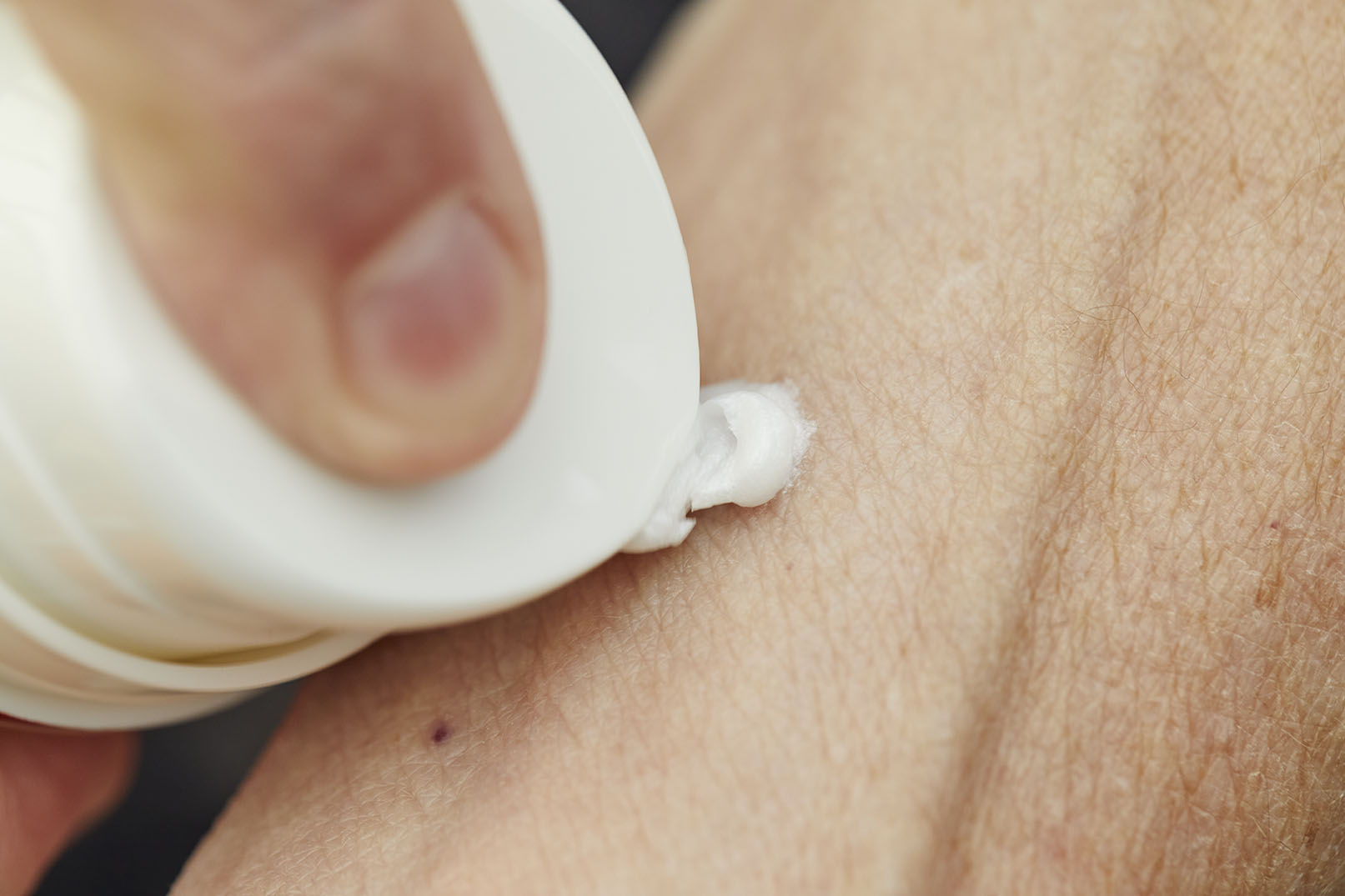
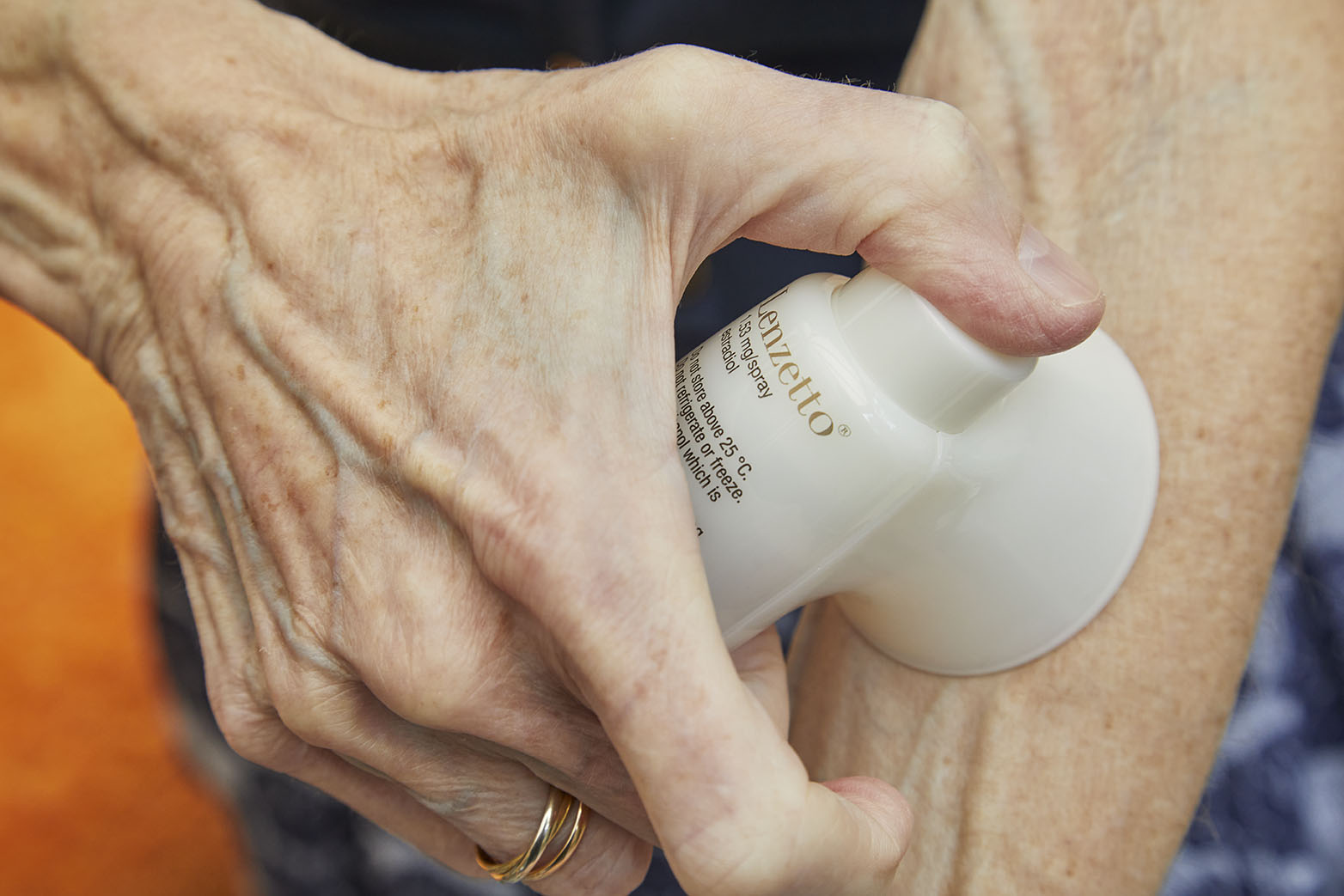
A huge amount of research has gone into understanding the best ways to get these hormones into the body, and the results of these have enabled me to establish standard methods. These may seem a little confusing to the uninitiated, but once the reasons are understood they make perfect sense. For example, both oestradiol and testosterone are rapidly removed from the body by the liver, and for this reason they should never be given as tablets. Absorption into the body via the gut (as would happen if taken as tablets) leads them to be sent straight to the liver, thus giving them little chance to have their full effect. For this reason, both these hormones are delivered by absorption through the skin, testosterone usually given as a cream or gel, oestradiol via either a similar kind of cream or gel, or via a spray or skin patches.
DHEA, 7-keto-DHEA , pregnenolone and progesterone are all best given orally as capsules. Since they are fat-soluble they must all be taken at the same time as some (healthy) fatty food, such as hummous, full-fat yogurt, nut butter or some kind of plant oil (such as olive, avocado or pumpkin seed oil). Without such food, the efficiency of their absorption through the gut wall and into the blood stream is greatly reduced.
In women, both oestradiol and progesterone can also be given via the vagina, though when given in this way neither hormone has benefits around the body. They tend to act only locally, progesterone giving good protection to the womb, oestradiol restoring stucture, lubrication and sensitivity (usually lost in menopausal women) to the vagina.
In men, progesterone can also be given via the rectum, a route that enables this hormone to have direct positive effects on the prostate gland.
What benefits you can expect from your BHRT programme
An effective BHRT programme will greatly slow, and even reverse many aspects of the ageing process. However, it is not an overnight cure, the first improvements becoming apparent only after a couple of weeks. Many others take a couple of months to appear.
Improvements usually include a decline in hot flushes, and a better mood, confidence, sleep, mental alertness, strength and libido. There will also be improvements in skin quality and (for those who have gained weight as part of the menopause/andropause) a loss of weight.
Invisible to the individual, but nonetheless of huge importance, will be a slowly developing protection against such illnesses of ageing as osteoporosis, heart disease and metabolic diseases, including diabetes.
Making changes to your BHRT programme
Things change with time, and you may eventually find that the effectiveness of the treatment declines. This is natural, as nothing ever stays the same, and is one of the main reasons for the annual check-up that I insist on for all my BHRT patients.
However, I have found that some patients take such a decline in effectivenessas a sign that the treatment doesn't fully work, and they take their own unilateral decision to change the treatment dose or frequency, or to stop the treatment altogether. Similarly, a change in personal circumstances, making it harder to afford the treatments, can lead people to make such a decision.
Itis essential that you never make such changes without first consulting with me. This is precisely my role, and you should never be shy to approach me when you have any such concerns.
It is vital to remember that the hormones are given in particular doses and specific ratios to each other for a deliberate reason, and changing any of them in the wrong way can have serious consequences. In women, for example, stopping progesterone while continuing with oestradiol treatment will result in you becoming oestrogen-dominant, a condition that causes significant weight gain and damage to the lining of the womb. In men, stopping progesterone while continuing with testosterone and DHEA will cause a fault in the metabolism of both of these latter hormones. The result will be that some of both hormones will be converted to oestradiol and dihydrotestosterone (DHT), causing weight gain and damage to the prostate gland.
So, if you perceive that your treatment may need changing for any reason, it is essential that you have a consultation with me first. There is usually a solution, with simple changes to doses and/or method of administration.
Staying with BHRT for the longterm
To this day, many GPs believe that a woman should receive HRT for no more than about 5-10 years. This belief is based on a common misconception (even among doctors) that the menopause is temporary, coupled with concerns about possible side-effects of longterm treatment.
As I've already mentioned, the menopause (as well as the andropause in men) is permanent. The lost hormones will never return by themselves. So even if some of the symptoms ease off with time, this does not mean you've 'come through' the menopause. It will always be there.
On the subject of side-effects, these concerns are based primarily on experience with use of the synthetic hormones, most especially earlier forms of progestins. These are manmade progesterones that are not identical to those occurring in our bodies, and which as a result do not always act in the correct way, leading to mistakes in metabolic control.
More recent progestins appear to have fewer side-effects, but there is growing evidence that by far the safest form of HRT is that which uses only bio-identical hormones. To date, studies into BHRT have revealed few, if any, side-effects, making it a safe option to continue for many years.
I have, however, found that a very small number of people can show some intolerance to one or another of the hormones. This is quite an unusual occurrence, and it can usually be overcome by a change in the method of administering the hormone concerned.
So overall, staying on BHRT for many years should be a very positive process, providing many of your body's metabolic processes with the hormones needed to control them successfully, greatly slowing (though not completely halting) the ageing process, and adding a lot more vigour to the final 20-30 years of your life.
It is of course every patient's right to decide whether or not to stay on or stop their BHRT programme. It is perfecty possible to stop receiving treatment at any time, but you must consult with me first. Please do not just one day stop and then completely disappear off my radar, as I will need to know that you're stopping treatment. Anyone who does decide to stop receiving treatment should be aware that within a couple of months (if not sooner) their hormone levels will have dropped back to pre-treatment levels, and they will be back with the symptoms of menopause/andropause, and the full ageing process.
Other patients sometimes decide to switch from BHRT to receiving standard HRT from their GP, often for financial reasons. The latter is clearly cheaper than BHRT, and so from that perspective is more attractive. Of course, once again, it is the patient's right to make such a change, but again please be sure to let me know first.
Any patient making this change should be aware that such standard HRT treatments provided by your GP are rather set to a 'one size fits all' regimen, with no tailoring to your personal needs. Furthermore, at least some of the hormones used are likely to be synthetic, and the doses given (at least for oestradiol and progesterone) are generally too low to be truly effective. There is no provision of DHEA, pregnenolone or testosterone. No HRT is available for men within the NHS, beyond the provision of testosterone alone.
Concerns about breast cancer
Finally, a brief look at concerns about breast cancer, the risk of which has been associated in some studies with receiving HRT. This will be covered in more detail in a later blog, but here a brief summary is appropriate, as these concerns are a frequent reason given for not starting BHRT or for quitting when some way into it.
Two studies that reviewed and analysed an accumulation of data from research into this question have indicated a small increased risk of breast cancer in women receiving HRT. The first of these studies was in the early 2000s and the second in 2015. Both had a huge impact in the general press, but were strongly criticised in the scientific and medical press for a wide range of weaknesses and shortcomings, and are now considered to be of dubious value.
Among the many problems are the fact that all forms of HRT were lumped together, so it is impossible to see whether some forms, such as treatment with synthetic progestins, come with greater or less risk than treatment with BHRT.
What's more, they took the breast cancer risk out of context, failing to compare (at least in the final analyses) with the effects of other factors, such as body weight. When this is looked at, it is clear that obesity is a far greater risk factor for breast cancer than HRT, something that neither study highlighted.
What both studies fundamentally failed to do was turn the entire question on its head and ask 'What is the risk of NOT taking HRT?'. When this is considered, women not receiving HRT will almost certainly develop at least some of the diseases of ageing, including osteoporosis, heart disease and type-2 diabetes. Those receiving HRT longterm are much less likely to do so. At present there is little data for such comparisons with men as BHRT treatment for them is fundamentally very new.
The overall conclusion is that nothing in life is risk-free, and you just have to make a choice as to what roads carry less risk and more benefit for you.